
 English
 Deutsch
 Français
 Italiano
 Español
 Polski
 Română
 Nederlands
 Português
 Svenska
 Dansk
Dansk
Mushrooms and Gut Health
Mushrooms are a diverse group of edible fungi, including varieties like button, shiitake, oyster, porcino, and chanterelle. They offer fiber, nutrients, and unique bioactive compounds, but their FODMAP and histamine profiles vary. Some mushrooms can trigger digestive symptoms in sensitive individuals, especially those with IBS or histamine intolerance. Preparation and portion size are key for tolerability.
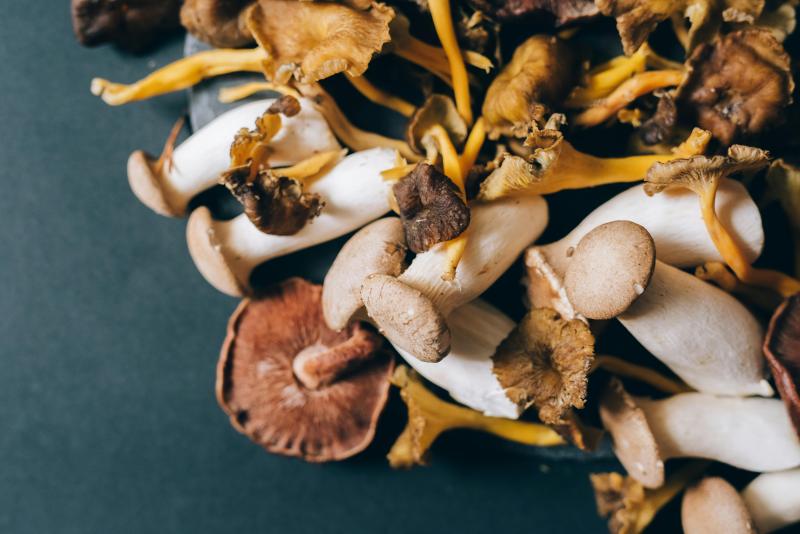
- FODMAP content varies: button, shiitake, and oyster mushrooms are high in FODMAPs, while boletus and chanterelle are lower.
- Some mushrooms act as histamine liberators or accumulate amines, relevant for histamine intolerance.
- All mushrooms provide both soluble and insoluble fibers, supporting gut health.
- Cooking improves digestibility and reduces risk of irritation.
- Allergies are rare but possible, especially in those with existing mushroom sensitivities.
- Dried or aged mushrooms may have higher amine content and can be harder to tolerate.
FODMAP Content in Mushrooms
FODMAP levels in mushrooms depend on the species and serving size. Button, shiitake, oyster, and enoki mushrooms are high in FODMAPs due to mannitol and fructans, which can cause bloating and discomfort in people with IBS. Boletus, chanterelle, and porcino mushrooms are generally lower in FODMAPs and better tolerated. Portion size matters, as even low-FODMAP mushrooms can cause symptoms if eaten in large amounts.
Histamine and Amines in Mushrooms
Many mushrooms, especially button and shiitake, act as histamine liberators, potentially triggering symptoms in people with histamine intolerance. Dried, aged, or improperly stored mushrooms can accumulate biogenic amines, increasing the risk of reactions. Fresh, well-cooked mushrooms are generally safer for those sensitive to histamine, but caution is still advised.
Fiber Content and Prebiotic Effects
Mushrooms provide both soluble and insoluble fibers, supporting regular bowel movements and feeding beneficial gut bacteria. Varieties like porcino, oyster, and shiitake are particularly rich in fiber, contributing up to 4 grams per 100 grams. These fibers can have prebiotic effects, but the overall benefit depends on individual tolerance and portion size.
Digestibility and Preparation Methods
Raw mushrooms can be tough to digest due to their cell wall structure and natural compounds. Cooking mushrooms by sautéing, boiling, or stewing breaks down these components, improving digestibility and reducing the risk of gut irritation. Cooking does not eliminate FODMAPs or amines, but it enhances nutrient absorption and flavor.
Allergies and Sensitivities to Mushrooms
True mushroom allergies are rare but possible, especially in individuals with mold or other fungal allergies. Symptoms may include itching, swelling, or digestive upset. Some people may also experience intolerances or skin reactions, such as shiitake dermatitis. Those with known sensitivities should introduce new mushroom varieties cautiously.
Dried, Wild, and Specialty Mushrooms
Dried mushrooms, such as dried black chanterelle or dried shiitake, often have more concentrated flavors and nutrients, but may also have higher amine content. Wild mushrooms like boletus and slippery jack require careful identification and preparation to avoid toxicity. Specialty mushrooms, including woodear and enoki, have unique textures and FODMAP profiles, so check individual tolerances.
List of Mushrooms
Explore the full range of edible mushrooms and their effects on gut health. Click each type for detailed information: