
 English
 Deutsch
 Français
 Italiano
 Español
 Polski
 Română
 Nederlands
 Português
 Svenska
 Dansk
Dansk
Root Vegetables and Gut Health
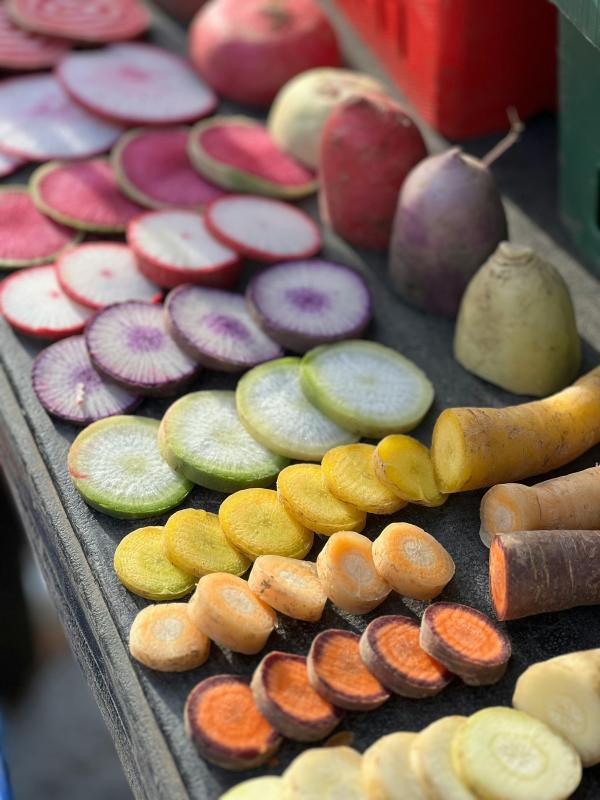
Root vegetables are a diverse group of edible plant roots, including beetroot, carrots, potatoes, radishes, parsnips, celeriac, and more. They are valued for their fiber, nutrients, and versatility. While generally gut-friendly, their FODMAP content, fiber types, and potential for triggering sensitivities can vary. Understanding these differences helps tailor root vegetable choices to individual digestive needs.
- FODMAP content varies widely; some root vegetables are low-FODMAP, while others require portion control.
- Most root vegetables are low in histamine and not known as histamine liberators or DAO blockers.
- Rich in both soluble and insoluble fiber, supporting gut motility and microbiome health.
- Preparation methods (raw, cooked, peeled) can affect digestibility and FODMAP levels.
- Allergies and sensitivities (salicylates, nickel, nightshades) are rare but possible in sensitive individuals.
- Some root vegetables, like potatoes, are nightshades and may not suit everyone.
FODMAP Content in Root Vegetables
FODMAP levels in root vegetables differ by type and serving size. Carrots, potatoes, and radishes are low in FODMAPs and suitable for most people with IBS. Beetroot, parsnip, celeriac, and some specialty potatoes (like blue or floury varieties) can be higher in FODMAPs, especially in larger portions. Monitoring serving size and preparation method is important for those with FODMAP sensitivities.
Histamine and Root Vegetables
Most root vegetables are low in histamine and do not act as histamine liberators or DAO blockers. This makes them generally safe for people with histamine intolerance. However, spoilage or long storage can increase amine content, so fresh preparation is best. Rarely, individuals may react to amines or other plant compounds present in certain roots.
Fiber Content and Gut Support
Root vegetables are excellent sources of both soluble and insoluble fiber. Soluble fiber, found in parsnip, carrots, and celeriac, helps feed beneficial gut bacteria and regulate digestion. Insoluble fiber, abundant in potatoes with skin and radishes, promotes regular bowel movements. This fiber diversity supports gut health and can help prevent constipation.
Prebiotic Effects and Microbiome
Several root vegetables, such as Jerusalem artichoke (not in this list but related), parsnip, and beetroot, contain fibers and carbohydrates with prebiotic effects. These compounds feed beneficial gut bacteria, supporting a balanced microbiome. While prebiotic effects are generally positive, they may cause bloating or gas in sensitive individuals, especially if introduced rapidly or in large quantities.
Digestibility and Preparation Methods
Cooking root vegetables softens their fibers and can reduce FODMAP content, making them easier to digest for most people. Raw root vegetables, such as carrots or radishes, may cause mild bloating in sensitive individuals. Peeling potatoes or carrots can lower fiber and reduce certain sensitivities, while leaving the skin on boosts fiber intake.
Allergies and Sensitivities
Allergies to root vegetables are rare but possible, especially in people with pollen-food syndrome or sensitivities to salicylates, nickel, or nightshades. Potatoes are nightshades and may cause symptoms in some individuals. Beetroot and carrots can be moderately high in salicylates and nickel, which may affect sensitive people.
Nightshade Family and Root Vegetables
Potatoes, including blue, floury, waxy, and standard varieties, belong to the nightshade family. Most people tolerate nightshades well, but some with autoimmune conditions or specific sensitivities may experience digestive discomfort or joint pain. Other root vegetables, like carrots and parsnips, are not nightshades and are generally well tolerated.
List of Root Vegetables
Explore the full range of root vegetables and their individual gut health profiles. Click each for detailed information:
Carrot
Carrot and Gut Health: FODMAP, Fiber, Histamine, and Digestive Impact
Radish
Radish and Gut Health: FODMAP, Fiber, Histamine, and Digestive Effects
Turnip
Turnip and Gut Health: FODMAP, Histamine, Fiber, and Digestion