
 English
 Deutsch
 Français
 Italiano
 Español
 Polski
 Română
 Nederlands
 Português
 Svenska
 Dansk
Dansk
Tzatziki and Gut Health
Tzatziki is a classic Mediterranean dip made from yoghurt, cucumber, garlic, olive oil, dill, mint, parsley, vinegar, and salt. Its fresh ingredients offer hydration, probiotics, and fiber, but also introduce considerations for FODMAPs, histamine, lactose, and various sensitivities. Tzatziki can be gut-friendly for many, but may cause symptoms in those with certain intolerances.
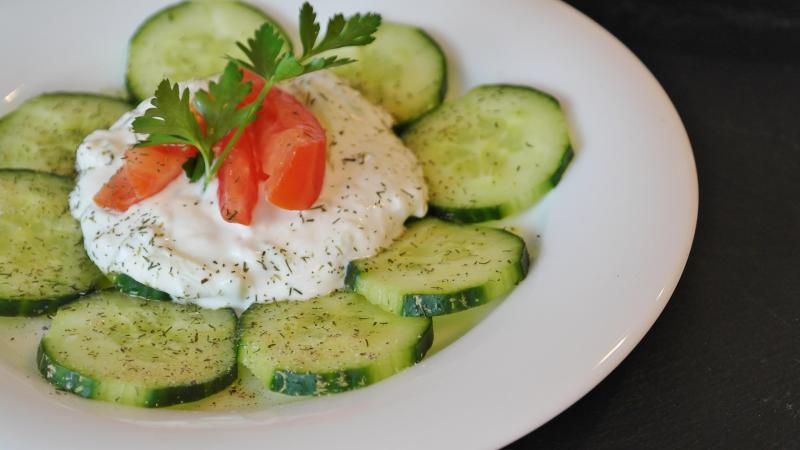
- Contains yoghurt, which is high in histamine and may trigger symptoms in sensitive individuals
- Garlic is high in FODMAPs and can provoke IBS symptoms
- Cucumber, dill, mint, and parsley are low in FODMAPs and generally well tolerated
- Yoghurt provides probiotics that support gut microbiota
- Vinegar may act as a histamine liberator and can aggravate reflux in sensitive people
- Herbs add small amounts of fiber, but also salicylates and nickel for those sensitive
FODMAP Content in Tzatziki
Tzatziki contains both low- and high-FODMAP ingredients. Cucumber, dill, mint, parsley, olive oil, vinegar, and salt are low in FODMAPs and suitable for most people with IBS. However, garlic is high in fructans, a FODMAP that can trigger bloating and discomfort in sensitive individuals. Yoghurt contains lactose, but fermentation reduces its FODMAP load, making small portions more tolerable for some.
Histamine and Amines in Tzatziki
Yoghurt and vinegar in tzatziki are fermented and high in histamine or may act as histamine liberators. Garlic and some herbs can also trigger histamine release in sensitive individuals. People with histamine intolerance may experience headaches, flushing, or digestive symptoms after eating tzatziki, especially if the yoghurt is not fresh or the vinegar is wine-based.
Lactose and Dairy Sensitivity
Yoghurt is the main dairy component in tzatziki. Fermentation reduces lactose, so small servings are often tolerated by those with mild lactose intolerance. However, people with severe lactose intolerance or milk allergy should avoid traditional tzatziki or use lactose-free yoghurt alternatives.
Probiotics and Gut Microbiota
Yoghurt in tzatziki often contains live cultures such as Lactobacillus and Bifidobacterium. These probiotics can help support a healthy gut microbiota, aid digestion, and may reduce bloating or irregularity in some individuals. The probiotic benefit depends on the type of yoghurt and whether live cultures are present at serving.
Fiber Content and Digestive Support
Tzatziki contains small amounts of both soluble and insoluble fiber from cucumber, dill, mint, and parsley. While not a major fiber source, these herbs and vegetables can gently support gut motility and feed beneficial bacteria. For a fiber boost, pair tzatziki with fiber-rich vegetables or whole grain breads.
Acidity and Reflux Concerns
Vinegar in tzatziki increases its acidity, which can aggravate symptoms in people prone to acid reflux, gastritis, or heartburn. Even small amounts may trigger discomfort in sensitive individuals. Using less vinegar or choosing milder types can help reduce the risk of irritation.
Salicylates and Nickel Sensitivities
Herbs like dill, mint, and parsley are naturally high in salicylates and may contain moderate nickel. People with salicylate or nickel sensitivity could experience digestive upset or headaches after consuming tzatziki. Most people tolerate these herbs well, but those with known sensitivities should use caution.
Allergy and Intolerance Risks
Tzatziki contains dairy, which is unsuitable for those with milk allergy. Garlic and herbs rarely cause allergies, but can trigger reactions in people with allium or herb sensitivities. Vinegar and salt are generally safe, but additives in some vinegars or specialty salts may cause issues for highly sensitive individuals.
Preparation and Tolerability
Tzatziki is typically served cold and made with raw ingredients. Using garlic-infused oil instead of raw garlic can reduce FODMAP content for sensitive individuals. Choosing fresh herbs and high-quality yoghurt improves both flavor and gut tolerability. Adjusting vinegar and salt levels can also help those with reflux or sodium sensitivity.
Ingredients in Tzatziki
Explore the gut health impact of each tzatziki ingredient. Click for detailed information:
Cucumber
Cucumber and Gut Health: FODMAP, Histamine, Fiber, and Digestion
Dill
Dill and Gut Health: FODMAP, Histamine, Fiber, and Sensitivities
Garlic
Garlic and Gut Health: FODMAP, Histamine, Fiber, and Sensitivity
Mint
Mint and Gut Health: FODMAP, Histamine, Fiber, Digestion, and Allergies
Olive Oil
Olive Oil and Gut Health: FODMAP, Histamine, Digestion, and Sensitivities
Parsley
Parsley and Gut Health: FODMAP, Histamine, Fiber, and Sensitivities
Yoghurt
Yoghurt and Gut Health: FODMAP, Histamine, Lactose, and Probiotics