
 English
 Deutsch
 Français
 Italiano
 Español
 Polski
 Română
 Nederlands
 Português
 Svenska
 Dansk
Dansk
Cucumber and Gut Health
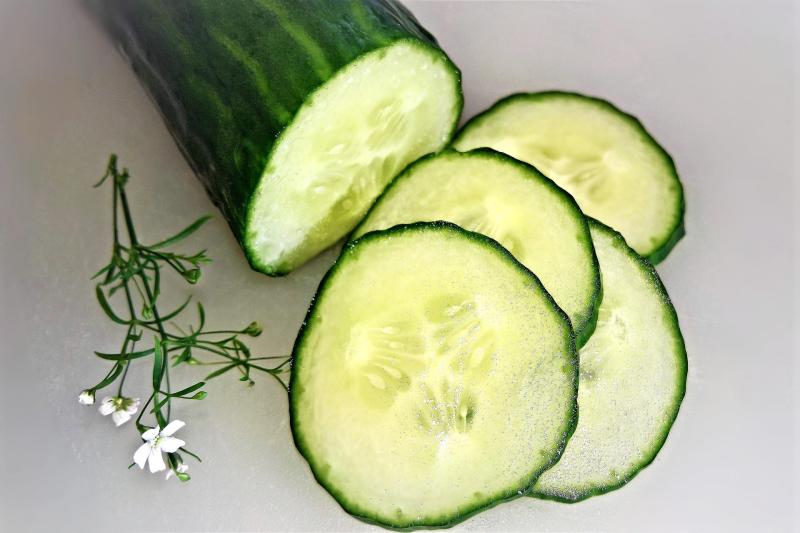
Cucumber is a refreshing fruit vegetable commonly eaten raw or pickled. It is low in calories, high in water, and generally easy to digest. While usually well tolerated, cucumbers can cause symptoms in some people with sensitive guts or allergies.
- Very low in FODMAPs, suitable for most with IBS
- Low histamine, but may act as a histamine liberator for some
- Contains both soluble and insoluble fiber, but in small amounts
- High water content supports hydration and gentle digestion
- Rarely causes allergies, but possible in pollen-sensitive individuals
- Cucumber skin may be harder to digest for some people
Cucumber and FODMAP Content
Cucumber is very low in FODMAPs, making it a safe choice for people following a low-FODMAP diet or managing irritable bowel syndrome (IBS). Both peeled and unpeeled cucumber are generally well tolerated in typical serving sizes. Pickled cucumbers may have added ingredients that affect FODMAP content, so check labels if you are sensitive.
| FODMAPs | Level | Portion Guidance |
|---|---|---|
|
Monosaccharides (Fructose)
|
Low |
|
|
Disaccharides (Lactose)
|
Low |
|
|
Fructooligosaccharides (Fructans)
|
Low |
|
|
Galactooligosaccharides (GOS)
|
Low |
|
|
Polyols (Mannitol)
|
Low |
|
|
Polyols (Sorbitol)
|
Low |
|
Histamine and Cucumber
Cucumber itself is low in histamine, but some people with histamine intolerance report symptoms after eating it. This may be because cucumber can act as a histamine liberator, triggering the release of histamine in sensitive individuals. Pickled or fermented cucumbers (like some types of pickles) may contain higher histamine levels due to the fermentation process.
| Histamine & Related | Level | Portion Guidance |
|---|---|---|
|
Histamine Level
|
Low |
|
|
Other Biogenic Amines
|
Low |
|
|
Histamine Liberator
|
Low | — |
|
DAO Blocker
|
Low | — |
Fiber Content in Cucumber
Cucumber contains a modest amount of fiber, with about 0.5 grams per 100 grams. It provides both soluble and insoluble fiber, supporting gentle bowel movements and feeding beneficial gut bacteria. However, the total fiber contribution is small compared to other vegetables, so cucumber is best enjoyed as part of a varied, fiber-rich diet.
Total Fiber
Digestion and Water Content
Cucumber is over 95% water, which helps hydrate the digestive tract and can aid in smooth digestion. Most people find cucumber easy to digest, but the skin can be tougher for some, potentially causing mild bloating or discomfort. Peeling cucumber may improve tolerance for those with sensitive guts.
Cucumber Allergies and Sensitivities
Allergy to cucumber is rare but possible, especially in people with pollen allergies such as birch or ragweed. Symptoms may include itching or tingling in the mouth and throat. Nickel-sensitive individuals may also react to cucumber, as it can contain moderate levels of nickel.
Details
- Absent Wheat / Spelt
- Absent Rye
- Absent Barley
- Absent Oats
Details
- Absent Crabs
- Absent Prawns
- Absent Shrimp
- Absent Lobsters
- Absent Crayfish
Details
- Absent Almonds
- Absent Brazil Nuts
- Absent Cashews
- Absent Hazelnuts
- Absent Macadamia Nuts
- Absent Pecans
- Absent Pistachios
- Absent Walnuts
Details
- Absent Clams
- Absent Mussels
- Absent Octopus
- Absent Oysters
- Absent Snails
- Absent Squid
Preparation: Raw, Pickled, or Cooked
Cucumber is most often eaten raw, but it can also be pickled or lightly cooked. Raw cucumber provides the most hydration and crunch, while pickled cucumbers may have added salt, vinegar, or spices that affect gut tolerance. Cooking cucumber softens the fiber and may improve digestibility for sensitive individuals.