
 English
 Deutsch
 Français
 Italiano
 Español
 Polski
 Română
 Nederlands
 Português
 Svenska
 Dansk
Dansk
Cabbage and Gut Health
Cabbage is a cruciferous vegetable known for its fiber content and distinctive flavor. It offers benefits for gut health but may cause digestive symptoms in sensitive individuals, especially those with IBS or histamine intolerance.
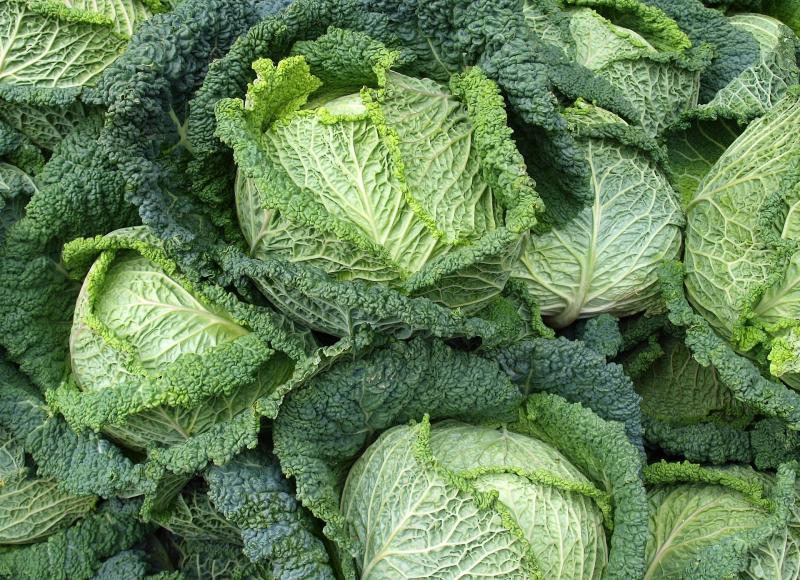
- Contains FODMAPs (fructans, GOS, polyols); tolerance depends on portion size
- Low in histamine but may trigger symptoms in sensitive individuals
- Rich in both soluble and insoluble fibers, supporting gut motility and microbiota
- Can cause bloating or gas due to fermentable carbohydrates
- Rarely causes allergies, but cross-reactions are possible
- Preparation method (raw, cooked, fermented) affects digestibility
Cabbage and FODMAP Content
Cabbage contains several types of FODMAPs, including fructans, galacto-oligosaccharides (GOS), mannitol, and sorbitol. These fermentable carbohydrates can cause bloating, gas, and discomfort in people with IBS or FODMAP sensitivity. Small servings (up to 75 grams) are usually better tolerated, while larger portions increase the risk of symptoms.
| FODMAPs | Level | Portion Guidance |
|---|---|---|
|
Monosaccharides (Fructose)
|
Low | — |
|
Disaccharides (Lactose)
|
Low | — |
|
Fructooligosaccharides (Fructans)
|
Moderate |
|
|
Galactooligosaccharides (GOS)
|
Moderate |
|
|
Polyols (Mannitol)
|
Moderate |
|
|
Polyols (Sorbitol)
|
Moderate |
|
Histamine and Cabbage
Cabbage is naturally low in histamine and other amines, but some people with histamine intolerance may still react to it. It is sometimes considered a weak histamine liberator, meaning it may trigger the release of histamine in sensitive individuals. Fermented cabbage products, like sauerkraut, can have higher histamine levels.
| Histamine & Related | Level | Portion Guidance |
|---|---|---|
|
Histamine Level
|
Low–Moderate |
|
|
Other Biogenic Amines
|
Low–Moderate |
|
|
Histamine Liberator
|
Low–Moderate | — |
|
DAO Blocker
|
Low | — |
Fiber Content in Cabbage
Cabbage provides about 2.5 grams of fiber per 100 grams, with a mix of soluble and insoluble fibers. Soluble fiber supports beneficial gut bacteria, while insoluble fiber helps regulate bowel movements. This combination can promote overall digestive health, but may also contribute to gas and bloating in sensitive people.
Total Fiber
Fermented Cabbage and Gut Health
Fermented cabbage, such as sauerkraut or kimchi, contains probiotics that support gut microbiota. However, fermentation increases histamine and amine content, which can trigger symptoms in histamine-sensitive individuals. Fermented cabbage is also more acidic and may cause discomfort in those with reflux or sensitive stomachs.
Digestibility and Preparation Methods
Raw cabbage is harder to digest and more likely to cause bloating or gas due to its fiber and FODMAP content. Cooking cabbage softens its fibers and can reduce some FODMAPs, making it easier to tolerate for many people. Fermented forms offer probiotics but may not suit everyone due to increased histamine.
Cabbage Allergies and Sensitivities
True cabbage allergy is rare, but cross-reactions can occur in people allergic to other cruciferous vegetables. Symptoms may include oral itching or mild digestive upset. Nickel-sensitive individuals may also react, as cabbage can be moderate to high in nickel.
Details
- Absent Wheat / Spelt
- Absent Rye
- Absent Barley
- Absent Oats
Details
- Absent Crabs
- Absent Prawns
- Absent Shrimp
- Absent Lobsters
- Absent Crayfish
Details
- Absent Almonds
- Absent Brazil Nuts
- Absent Cashews
- Absent Hazelnuts
- Absent Macadamia Nuts
- Absent Pecans
- Absent Pistachios
- Absent Walnuts
Details
- Absent Clams
- Absent Mussels
- Absent Octopus
- Absent Oysters
- Absent Snails
- Absent Squid