
 English
 Deutsch
 Français
 Italiano
 Español
 Polski
 Română
 Nederlands
 Português
 Svenska
 Dansk
Dansk
Pickled Cucumber and Gut Health
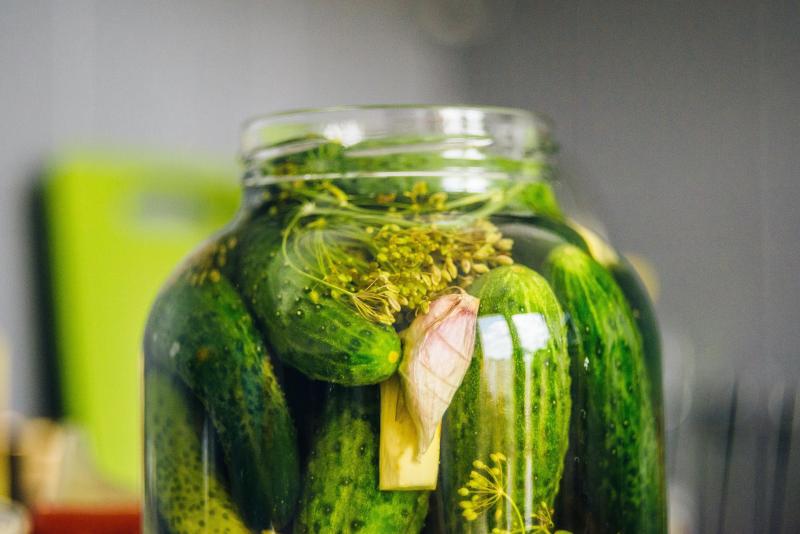
Pickled cucumber is a preserved vegetable made by fermenting or brining cucumbers. Its tangy flavor and crunchy texture make it popular in many cuisines. While pickled cucumbers can offer fiber and hydration, their fermentation and additives may affect gut health, especially for sensitive individuals.
- May be high in histamine and other biogenic amines due to fermentation
- FODMAP content varies; portion size and added ingredients matter
- Contains both soluble and insoluble fiber, supporting gut motility
- Commercial varieties may contain sugar, vinegar, preservatives, or colorants
- Pickling spices can include potential allergens like mustard, celery, garlic, or onion
- Possible gluten or soy traces from vinegar or flavorings
Pickled Cucumber and FODMAPs
Pickled cucumbers have not been specifically tested for FODMAP content, but the pickling process may increase FODMAPs, especially if garlic, onion, or certain vinegars are used. Small portions are likely tolerated by many with IBS, but larger servings or certain recipes may trigger symptoms. Always check ingredient lists and start with a small amount if you are sensitive.
| FODMAPs | Level | Portion Guidance |
|---|---|---|
|
Monosaccharides (Fructose)
|
Low–Moderate |
|
|
Disaccharides (Lactose)
|
Low | — |
|
Fructooligosaccharides (Fructans)
|
Low | — |
|
Galactooligosaccharides (GOS)
|
Low | — |
|
Polyols (Mannitol)
|
Low | — |
|
Polyols (Sorbitol)
|
Low–Moderate |
|
Histamine and Biogenic Amines in Pickled Cucumber
Fermented foods like pickled cucumbers are often high in histamine and other biogenic amines, such as tyramine. These compounds can trigger symptoms in people with histamine intolerance, including headaches, flushing, or digestive upset. Commercial and homemade pickles can both be problematic, especially if aged or stored for longer periods.
| Histamine & Related | Level | Portion Guidance |
|---|---|---|
|
Histamine Level
|
Moderate |
|
|
Other Biogenic Amines
|
Moderate |
|
|
Histamine Liberator
|
Moderate | — |
|
DAO Blocker
|
Low | — |
Fiber Content and Gut Motility
Pickled cucumbers provide both soluble and insoluble fiber, supporting healthy bowel movements and feeding beneficial gut bacteria. While the fiber content is modest (about 1.2 grams per 100 grams), regular inclusion can contribute to overall gut health. The crunchy texture also encourages chewing, which aids digestion.
Total Fiber
Potential Allergens and Additives
Commercial pickled cucumbers may contain allergens such as mustard, celery, garlic, or onion in spice blends. Some brands use barley malt vinegar or wheat-based flavorings, introducing gluten. Additives like sulfites, benzoates, MSG, or artificial colorants may also be present. Always check labels if you have food allergies or sensitivities.
Details
- Possible / Varies Wheat / Spelt
- Absent Rye
- Possible / Varies Barley
- Absent Oats
Details
- Absent Crabs
- Absent Prawns
- Absent Shrimp
- Absent Lobsters
- Absent Crayfish
Details
- Absent Almonds
- Absent Brazil Nuts
- Absent Cashews
- Absent Hazelnuts
- Absent Macadamia Nuts
- Absent Pecans
- Absent Pistachios
- Absent Walnuts
Details
- Absent Clams
- Absent Mussels
- Absent Octopus
- Absent Oysters
- Absent Snails
- Absent Squid
Added Sugar and Sweeteners
Some pickled cucumbers, especially sweet or bread-and-butter varieties, contain added sugar or honey. This can affect blood sugar and may not be suitable for low-carb or ketogenic diets. For gut health, unsweetened or traditionally fermented pickles are generally a better choice.
Fermented vs. Vinegar-Pickled Cucumbers
Pickled cucumbers can be fermented (using salt and natural bacteria) or preserved in vinegar. Fermented pickles may offer probiotic benefits but are higher in histamine. Vinegar-pickled cucumbers are usually lower in histamine but may contain more additives. Preparation method affects both tolerability and gut impact.