
 English
 Deutsch
 Français
 Italiano
 Español
 Polski
 Română
 Nederlands
 Português
 Svenska
 Dansk
Dansk
Bean Sprouts and Gut Health
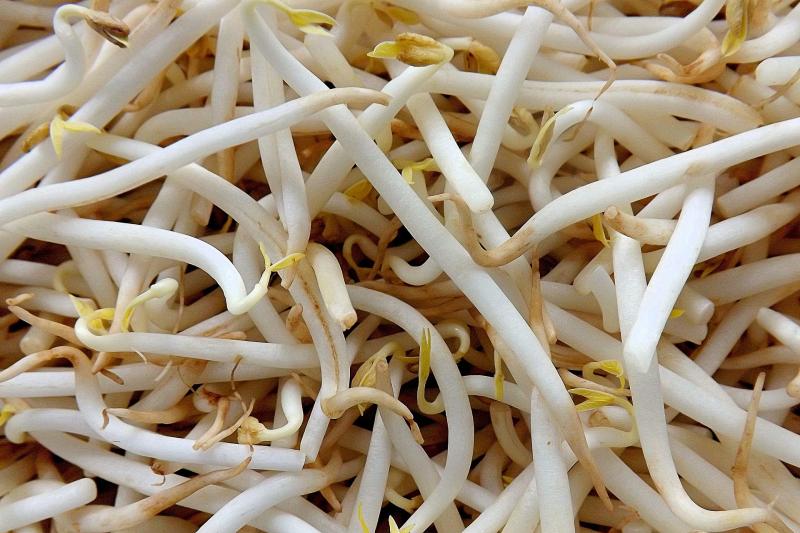
Bean sprouts are young shoots from sprouted beans, most commonly mung beans or soybeans. They are crisp, hydrating, and low in calories, making them a popular addition to salads and stir-fries. Their impact on gut health depends on factors like FODMAP content, histamine potential, fiber, and possible allergens.
- Low in FODMAPs, generally well tolerated in IBS
- Low in histamine but may act as a histamine liberator or contain other amines
- Contain both soluble and insoluble fiber, supporting gut motility
- Possible allergen risk if made from soybeans
- Legume family: may be higher in nickel and not suitable for strict paleo or keto diets
Bean Sprouts and FODMAP Content
Bean sprouts are considered low in FODMAPs, especially when consumed in moderate portions. This makes them a suitable vegetable option for people with irritable bowel syndrome (IBS) or those following a low-FODMAP diet. Unlike mature beans, the sprouting process reduces FODMAP content, lowering the risk of bloating or discomfort.
| FODMAPs | Level | Portion Guidance |
|---|---|---|
|
Monosaccharides (Fructose)
|
Low |
|
|
Disaccharides (Lactose)
|
Low |
|
|
Fructooligosaccharides (Fructans)
|
Low |
|
|
Galactooligosaccharides (GOS)
|
Low |
|
|
Polyols (Mannitol)
|
Low |
|
|
Polyols (Sorbitol)
|
Low |
|
Histamine and Other Amines in Bean Sprouts
Bean sprouts are naturally low in histamine, but they may act as histamine liberators or contain other biogenic amines like tyramine. This means they can trigger symptoms in people with histamine intolerance, even if their direct histamine content is low. Freshness is important, as older sprouts may accumulate more amines.
| Histamine & Related | Level | Portion Guidance |
|---|---|---|
|
Histamine Level
|
Low–Moderate |
|
|
Other Biogenic Amines
|
Moderate |
|
|
Histamine Liberator
|
Moderate | — |
|
DAO Blocker
|
Low | — |
Fiber Content and Gut Motility
Bean sprouts provide a mix of soluble and insoluble fiber, with about 1.8 grams per 100 grams. Insoluble fiber helps promote regular bowel movements, while soluble fiber can feed beneficial gut bacteria. This combination supports gut motility and overall digestive health, though the total fiber content is moderate compared to other legumes.
Total Fiber
Allergy Risks: Soy and Legume Sensitivity
Bean sprouts may be produced from mung beans or soybeans. Soybean sprouts carry a risk for people with soy allergies, which are among the EU's major allergens. Even mung bean sprouts can cause reactions in those sensitive to legumes. Always check the source if you have known legume or soy allergies.
Details
- Absent Wheat / Spelt
- Absent Rye
- Absent Barley
- Absent Oats
Details
- Absent Crabs
- Absent Prawns
- Absent Shrimp
- Absent Lobsters
- Absent Crayfish
Details
- Absent Almonds
- Absent Brazil Nuts
- Absent Cashews
- Absent Hazelnuts
- Absent Macadamia Nuts
- Absent Pecans
- Absent Pistachios
- Absent Walnuts
Details
- Absent Clams
- Absent Mussels
- Absent Octopus
- Absent Oysters
- Absent Snails
- Absent Squid
Digestibility and Preparation
Bean sprouts are easier to digest than mature beans due to reduced antinutrients and FODMAPs after sprouting. Light cooking can further improve tolerability and reduce the risk of foodborne illness. Raw sprouts are crisp but may be harder to digest for sensitive individuals or those with gut conditions.
Nickel Content in Bean Sprouts
As members of the legume family, bean sprouts can be moderate to high in nickel. People with nickel sensitivity or systemic nickel allergy syndrome (SNAS) may experience symptoms after eating them. If you are following a low-nickel diet, consider limiting bean sprouts or choosing alternatives.