
 English
 Deutsch
 Français
 Italiano
 Español
 Polski
 Română
 Nederlands
 Português
 Svenska
 Dansk
Dansk
Chickpeas and Gut Health
Chickpeas are a popular legume rich in fiber, plant protein, and essential nutrients. They support gut health but can trigger symptoms in sensitive individuals due to their FODMAP content and potential histamine reactions.
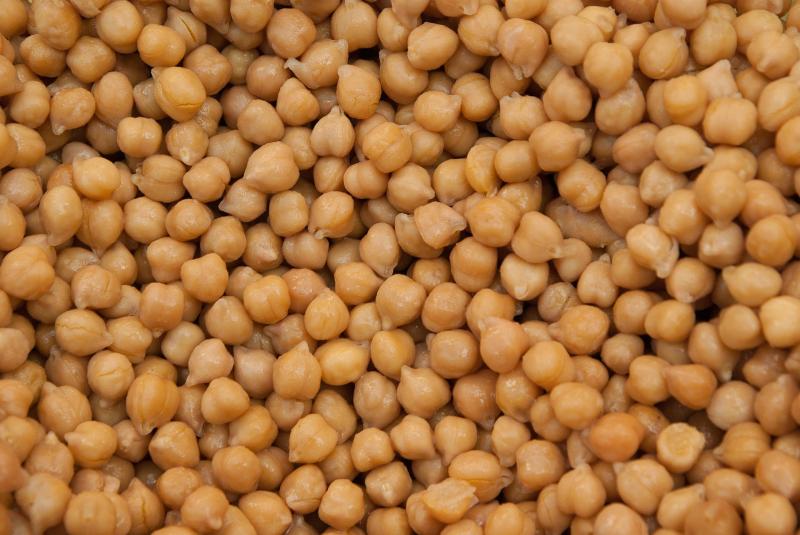
- High in FODMAPs (GOS), especially in larger portions
- May cause symptoms in people with histamine intolerance
- Excellent source of both soluble and insoluble fiber
- Supports gut microbiota but may cause gas or bloating
- Nickel-rich legume, relevant for nickel allergy
- Preparation method (canned vs. cooked) affects tolerability
Chickpeas and FODMAPs
Chickpeas are high in galacto-oligosaccharides (GOS), a type of FODMAP that can trigger digestive symptoms like bloating, gas, and discomfort in people with irritable bowel syndrome (IBS). Small portions of canned chickpeas (up to 42 grams drained) are lower in FODMAPs and may be tolerated, but larger servings or dried/cooked chickpeas often cause symptoms. Portion size is key for those on a low-FODMAP diet.
| FODMAPs | Level | Portion Guidance |
|---|---|---|
|
Monosaccharides (Fructose)
|
Low | — |
|
Disaccharides (Lactose)
|
Low | — |
|
Fructooligosaccharides (Fructans)
|
Low | — |
|
Galactooligosaccharides (GOS)
|
High | — |
|
Polyols (Mannitol)
|
Low | — |
|
Polyols (Sorbitol)
|
Low | — |
Histamine and Biogenic Amines in Chickpeas
Chickpeas are generally low in histamine, but some sensitive individuals may still react, especially to canned or processed chickpeas, which can contain moderate levels of biogenic amines like tyramine. People with histamine intolerance should monitor their response and consider limiting chickpea intake if symptoms occur.
| Histamine & Related | Level | Portion Guidance |
|---|---|---|
|
Histamine Level
|
Low–Moderate |
|
|
Other Biogenic Amines
|
Low–Moderate |
|
|
Histamine Liberator
|
Low | — |
|
DAO Blocker
|
Low | — |
Fiber Content and Gut Microbiota
Chickpeas are an excellent source of dietary fiber, providing both soluble and insoluble types. This fiber supports healthy bowel movements and feeds beneficial gut bacteria, promoting a balanced microbiota. However, the high fiber content can also lead to increased gas and bloating, especially for those not used to legumes.
Total Fiber
Prebiotic Effects of Chickpeas
The galacto-oligosaccharides (GOS) in chickpeas act as prebiotics, stimulating the growth of beneficial bacteria in the gut. This can improve gut barrier function and overall digestive health. However, prebiotic fibers can also cause discomfort in sensitive individuals, especially those with IBS or SIBO.
Digestive Tolerance and Preparation Methods
How chickpeas are prepared affects their digestibility. Canned chickpeas are often better tolerated than dried and home-cooked versions because some FODMAPs leach into the canning liquid. Rinsing canned chickpeas before eating can further reduce FODMAP content. Soaking and thorough cooking also help improve tolerance.
Allergies and Nickel Sensitivity
Chickpeas are a legume and can cause allergic reactions in some people, though true chickpea allergy is rare. They are also high in nickel, which may be relevant for those with nickel allergy or sensitivity, potentially causing skin or gut symptoms.
Details
- Absent Wheat / Spelt
- Absent Rye
- Absent Barley
- Absent Oats
Details
- Absent Crabs
- Absent Prawns
- Absent Shrimp
- Absent Lobsters
- Absent Crayfish
Details
- Absent Almonds
- Absent Brazil Nuts
- Absent Cashews
- Absent Hazelnuts
- Absent Macadamia Nuts
- Absent Pecans
- Absent Pistachios
- Absent Walnuts
Details
- Absent Clams
- Absent Mussels
- Absent Octopus
- Absent Oysters
- Absent Snails
- Absent Squid