
 English
 Deutsch
 Français
 Italiano
 Español
 Polski
 Română
 Nederlands
 Português
 Svenska
 Dansk
Dansk
Celery and Gut Health
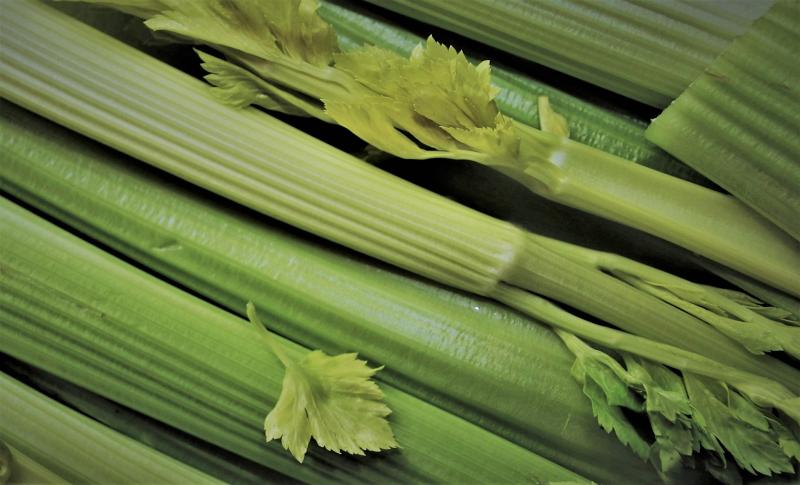
Celery is a crisp, hydrating stalk vegetable commonly used in salads, soups, and snacks. While it offers fiber and hydration, celery can trigger gut symptoms in some people due to its FODMAP content, allergen status, and natural compounds.
- High in FODMAPs (mannitol) at standard portions; can trigger IBS symptoms
- Recognized EU14 allergen; major trigger for some individuals
- Low in histamine but may act as a histamine liberator
- Contains both soluble and insoluble fiber, supporting gut motility
- Contains moderate salicylates and nickel, relevant for sensitive groups
Celery and FODMAP Content
Celery is high in FODMAPs, specifically mannitol, when consumed in standard portions. This makes it a common trigger for people with irritable bowel syndrome (IBS) or FODMAP sensitivities. Small amounts, such as a thin slice or two, may be tolerated, but larger servings often cause bloating, gas, or discomfort.
| FODMAPs | Level | Portion Guidance |
|---|---|---|
|
Monosaccharides (Fructose)
|
Low–Moderate |
|
|
Disaccharides (Lactose)
|
Low | — |
|
Fructooligosaccharides (Fructans)
|
Low–Moderate |
|
|
Galactooligosaccharides (GOS)
|
Low | — |
|
Polyols (Mannitol)
|
Moderate |
|
|
Polyols (Sorbitol)
|
Low | — |
Histamine and Histamine Liberation
Celery is naturally low in histamine but may act as a histamine liberator, meaning it can prompt the body to release stored histamine. This is relevant for individuals with histamine intolerance or mast cell activation, who may experience symptoms after eating celery even if its direct histamine content is low.
| Histamine & Related | Level | Portion Guidance |
|---|---|---|
|
Histamine Level
|
Low–Moderate |
|
|
Other Biogenic Amines
|
Low |
|
|
Histamine Liberator
|
Moderate | — |
|
DAO Blocker
|
Low | — |
Fiber Content in Celery
Celery provides about 1.6 grams of fiber per 100 grams, with a mix of soluble and insoluble fibers. These fibers support regular bowel movements and feed beneficial gut bacteria. However, for those sensitive to FODMAPs, the fiber benefit must be balanced against potential gut symptoms.
Total Fiber
Celery Allergy and Sensitivity
Celery is a major allergen in the EU and can cause severe reactions in sensitive individuals, including oral allergy syndrome, hives, or even anaphylaxis. People with known celery allergy should strictly avoid all forms, including raw, cooked, and as a spice.
Details
- Absent Wheat / Spelt
- Absent Rye
- Absent Barley
- Absent Oats
Details
- Absent Crabs
- Absent Prawns
- Absent Shrimp
- Absent Lobsters
- Absent Crayfish
Details
- Absent Almonds
- Absent Brazil Nuts
- Absent Cashews
- Absent Hazelnuts
- Absent Macadamia Nuts
- Absent Pecans
- Absent Pistachios
- Absent Walnuts
Details
- Absent Clams
- Absent Mussels
- Absent Octopus
- Absent Oysters
- Absent Snails
- Absent Squid
Salicylates and Nickel in Celery
Celery contains moderate levels of salicylates and nickel, which can cause symptoms in people with sensitivities to these compounds. Reactions may include mouth irritation, skin rashes, or digestive discomfort. Those with known salicylate or nickel sensitivity should monitor their intake.
Digestive Effects and Tolerability
Celery’s high water content and fiber can aid digestion and hydration. However, for those with sensitive guts, the mannitol content may outweigh these benefits, leading to bloating or loose stools. Cooking celery can sometimes improve tolerability by breaking down some fibers.